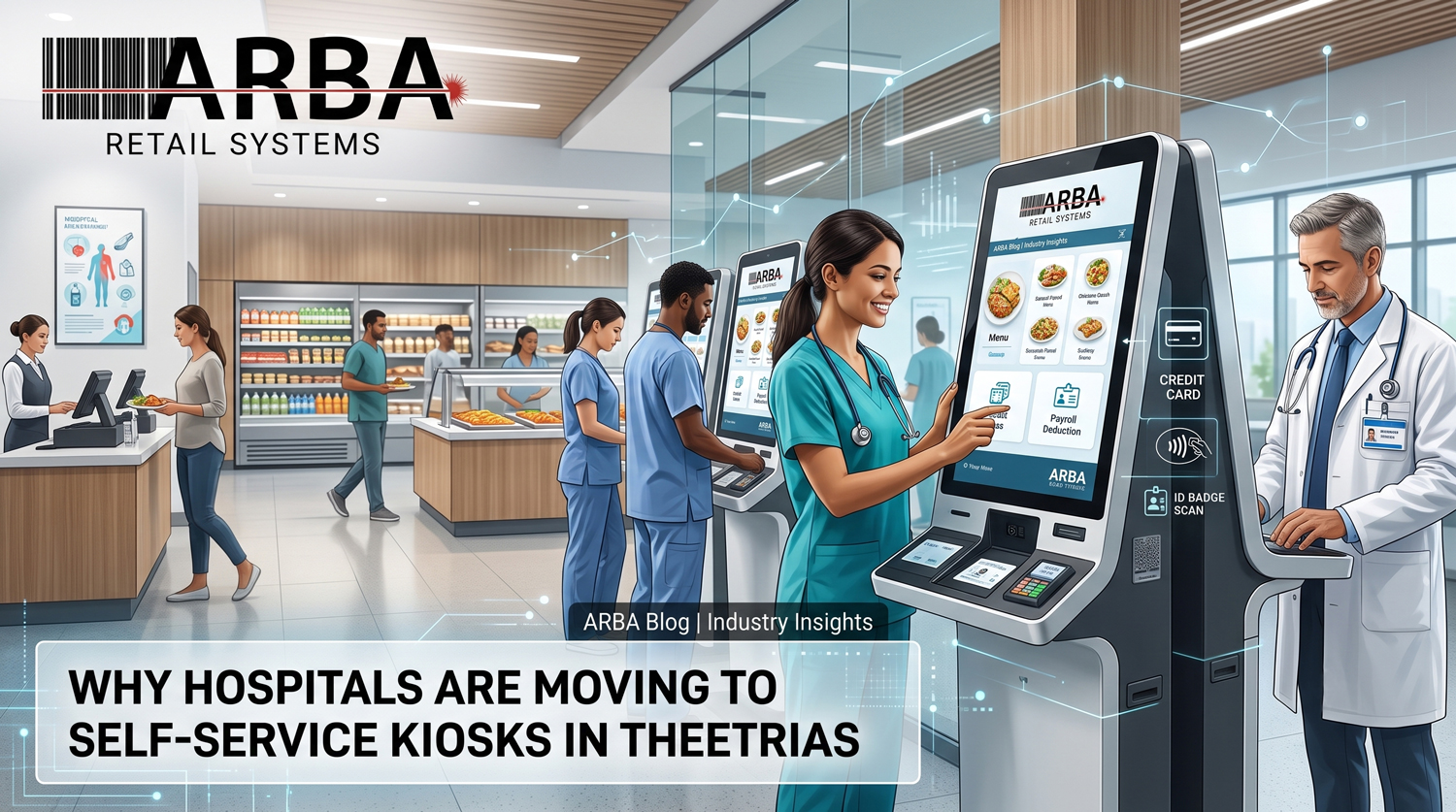
Hospital food service environments operate under conditions unlike almost any other dining venue. Unlike traditional restaurants or standard corporate cafeterias that experience predictable lunch rushes, hospital dining facilities must accommodate round-the-clock shift changes, unpredictable emergency surges, and a diverse customer base ranging from stressed clinical staff to visiting family members.
To manage these operational pressures while maintaining high service standards, healthcare administrators are increasingly upgrading their dining infrastructures. Implementing self-service ordering terminals powered by a specialized Hospital Cafeteria POS has rapidly shifted from an innovative luxury to an operational necessity across modern healthcare networks.
1. Accelerating Throughput During Peak Shift Rushes
In a hospital setting, meal breaks for doctors, nurses, and clinical specialists are strictly timed and frequently interrupted. When shift changes occur—typically around 7:00 AM and 7:00 PM—the cafeteria faces an immediate influx of hundreds of employees needing nourishment within a narrow window.
Traditional cashier-operated lines quickly become bottlenecked, forcing staff members to spend half of their allotted break standing in line. By deploying self-service kiosks integrated into the primary Cafeteria Point Of Sale, facilities can multiply their order intake capacity without expanding the physical footprint of the checkout counter. Kiosks allow multiple users to browse menus, customize orders, and pay simultaneously, drastically reducing wait times and ensuring clinical staff get the rest they need.
2. Mitigating Food Service Labor Shortages
Healthcare facilities across the country continue to navigate labor constraints, particularly within support departments like dietary services and cafeteria operations. Finding and retaining dedicated cashier staff for 24/7 dining operations remains an ongoing challenge.
Self-service technology offers a practical solution by automating the transactional aspect of ordering:
- Redeploying Staff to High-Value Tasks: Instead of keeping multiple employees stationed behind registers during slow hours, workers can be reassigned to food preparation, line restocking, or sanitation.
- Maintaining 24/7 Operations Efficiently: Self-service ordering kiosks enable hospitals to keep cafeteria seating areas and fresh food options available during late-night shifts without needing full cashier coverage.
- Reducing Order Entry Errors: Customers input their own modifications directly into the terminal, significantly lowering the rate of kitchen remakes and food waste.
According to research published by the Healthcare Financial Management Association (HFMA), optimizing operational efficiency in non-clinical support services is one of the most effective strategies for health systems seeking to control overhead costs without impacting patient care quality.
3. Seamless Integration with Employee Payroll Deductions
A standard off-the-shelf retail kiosk cannot meet the unique billing demands of a medical center. Healthcare workers rarely want to pull out personal credit cards or cash while in scrub uniform during a quick shift break.
The true value of a kiosk ecosystem comes from a dedicated Hospital Food Service POS that connects self-order hardware directly to the facility’s internal HR and payroll database.
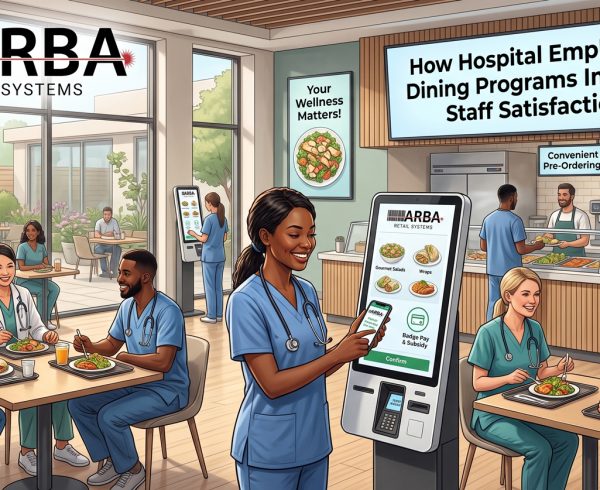
Through an integrated Payroll Deduction POS, employees simply scan their staff ID badge at the kiosk. The system instantly verifies their eligibility, applies any daily employer subsidies, and routes the transaction directly to their next paycheck. This closed-loop transaction takes less than three seconds at the terminal screen, far outpacing credit card chip processing or cash handling.
4. Supporting Health, Hygiene, and Contactless Standards
Hygiene protocols within medical facilities extend far beyond operating rooms and patient wards. Hospital dining rooms are shared spaces where clinical staff coming off floor rounds interact with external visitors.
Modern kiosk setups support a comprehensive Contactless POS Solution that minimizes physical touchpoints:
- Tap-to-Pay and Badge Scanning: Users can complete transactions entirely through contactless RFID badge swipes, Apple Pay, Google Wallet, or contactless chip cards.
- Antimicrobial Touchscreens: Purpose-built healthcare hardware utilizes specialized glass coatings designed to withstand frequent medical-grade chemical sanitization without degrading responsiveness.
- Mobile Web Ordering Integration: Advanced Healthcare Food Ordering System platforms allow staff to scan a QR code at the kiosk or on their mobile device to order and pay directly from their phones, bypassing shared surfaces entirely.
5. Harnessing Real-Time Inventory and Sales Analytics
Managing inventory in a high-volume healthcare dining setting requires continuous tracking to prevent stockouts of popular items while minimizing perishable food spoilage.
When self-service kiosks operate on a unified Hospital POS Solutions framework, every transaction immediately updates central inventory counters. If a grab-and-go item sells out, the system automatically removes it from all kiosk displays in real time, preventing customer frustration. Furthermore, management gains clear data visibility into sales patterns, allowing dietary teams to optimize prep quantities for specific shifts and days of the week.
Modernizing Healthcare Dining Facilities
Transitioning to self-service cafeteria kiosks allows healthcare organizations to solve long-standing operational hurdles. By combining speed of service, labor flexibility, contactless hygiene, and seamless employee badge payments, medical centers can elevate the dining experience for everyone on campus.
To explore how tailored point-of-sale hardware and closed-loop payroll integrations can transform your cafeteria operations, review the enterprise solutions available at ARBA Retail Systems.