When upgrading cafeteria or gift shop technology, hospital administrators often wonder if they can simply deploy off-the-shelf software designed for standard restaurants or clothing stores. While a generic retail setup might seem cost-effective initially, it completely lacks the architectural depth required to operate within a secure, high-volume medical campus.
Understanding the structural differences between traditional software and specialized Hospital POS Solutions is critical for making a smart long-term technology investment.
1. Closed-Loop Ecosystems vs. Open Retail
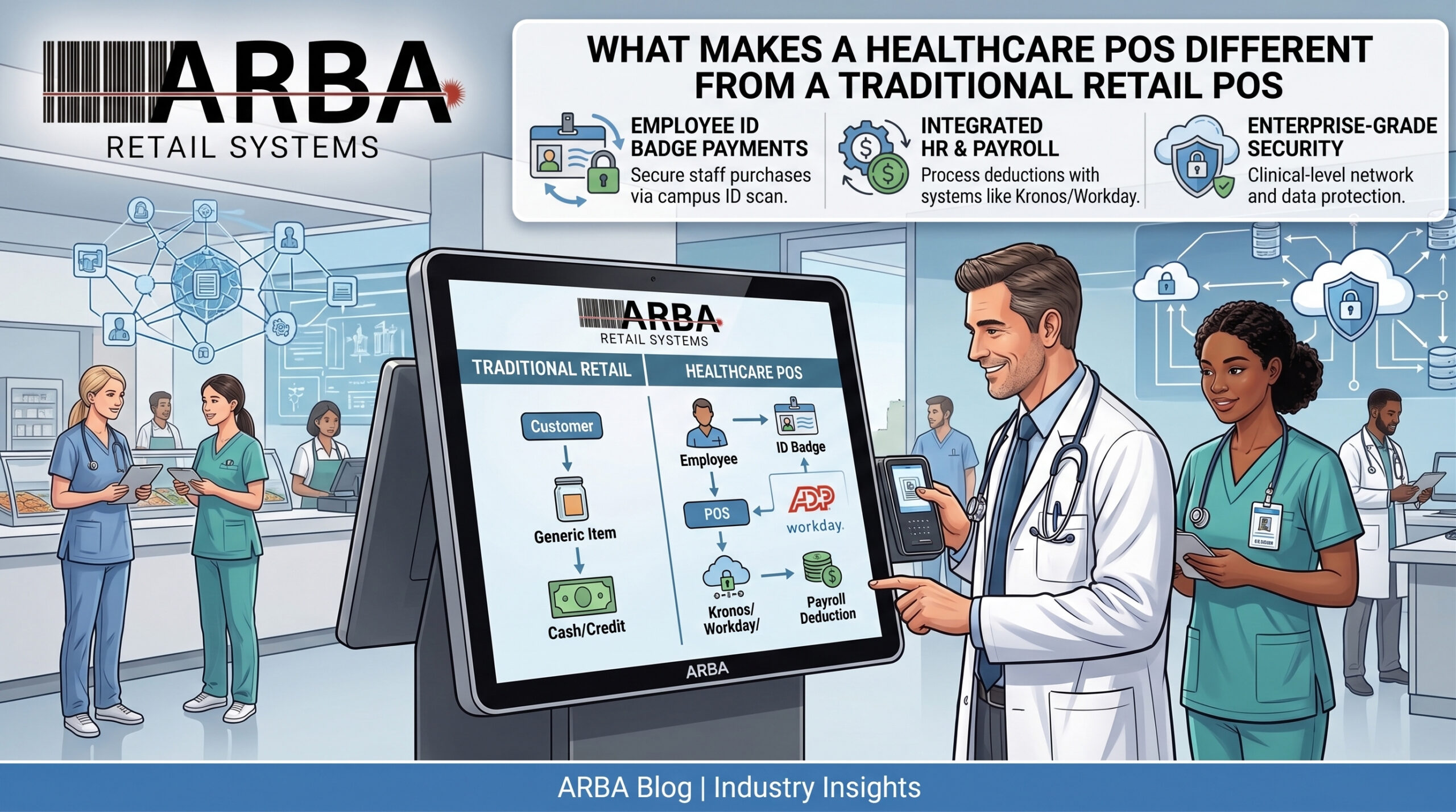
A traditional retail environment caters exclusively to external consumers using external payment methods. A healthcare environment functions as a closed-loop micro-city. Your primary customer base consists of internal employees who require specialized purchasing workflows. A true medical-grade system integrates directly with staff badges, allowing for meal subsidies, departmental charge codes, and payroll deductions. Standard retail systems cannot connect to internal hospital databases to process these internal transactions.
2. Deep Integration with Enterprise HR Software
Traditional point-of-sale systems integrate with standard accounting software. Enterprise POS Software designed for healthcare must go much deeper. It needs to securely interface with massive institutional HR platforms like Kronos, Workday, or ADP. This ensures that every badge swipe in the cafeteria or gift shop is accurately recorded, encrypted, and batched to the correct employee profile for the next billing cycle without manual data entry.
3. Managing 24/7 Shift Dynamics
Restaurants and retail shops have standard operating hours and predictable lunch rushes. Hospitals operate around the clock, with massive traffic spikes occurring exactly during shift changes. A Clinical Cafeteria POS is engineered for maximum throughput during these brief windows. Furthermore, it supports unattended self-service kiosks and micro-markets, allowing night shift workers to access fresh food and pay autonomously when cashier staff are off duty.
4. Institutional Security and Compliance
Data security in a medical facility is strictly regulated. The Healthcare Information and Management Systems Society (HIMSS) emphasizes that highly secure, interconnected operational software is vital for protecting institutional data.
Investing in technology built specifically for the healthcare sector protects your network and vastly improves the daily experience of your clinical staff. For more information on deploying secure, integrated dining and retail software, contact the team at ARBA Retail Systems.