Healthcare organizations operate in an era where clinical staff retention and morale are paramount to institutional success. Hospital leadership teams continuously seek meaningful, practical ways to support doctors, nurses, and allied health professionals who work under demanding conditions.
While wellness initiatives often focus on scheduling flexibility or mental health resources, one of the most immediate, daily touchpoints for employee satisfaction is the hospital dining program. Upgrading food service operations with a modern Hospital POS Systems infrastructure directly impacts staff well-being by removing friction from their daily work routines.
1. Maximizing Valuable Break Time for Clinical Staff
For a nurse operating in an intensive care unit or a surgical tech between procedures, a 30-minute meal break is a crucial period for physical recovery. However, when getting food involves navigating long lines, waiting for slow card processors, or searching for a wallet left in a staff locker, that 30-minute break quickly shrinks to a few rushed minutes.
Streamlining transaction speeds transforms the employee experience:
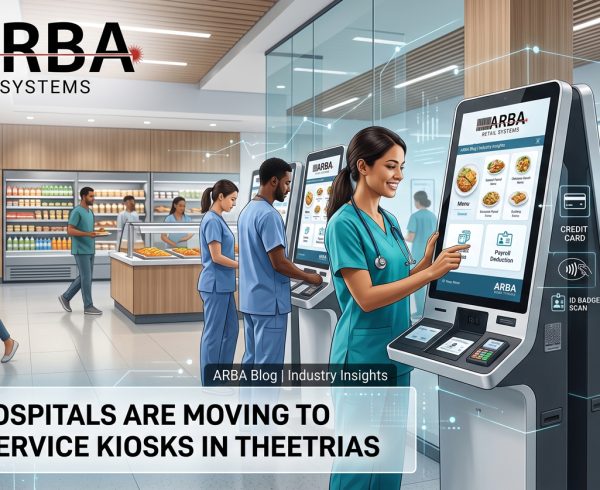
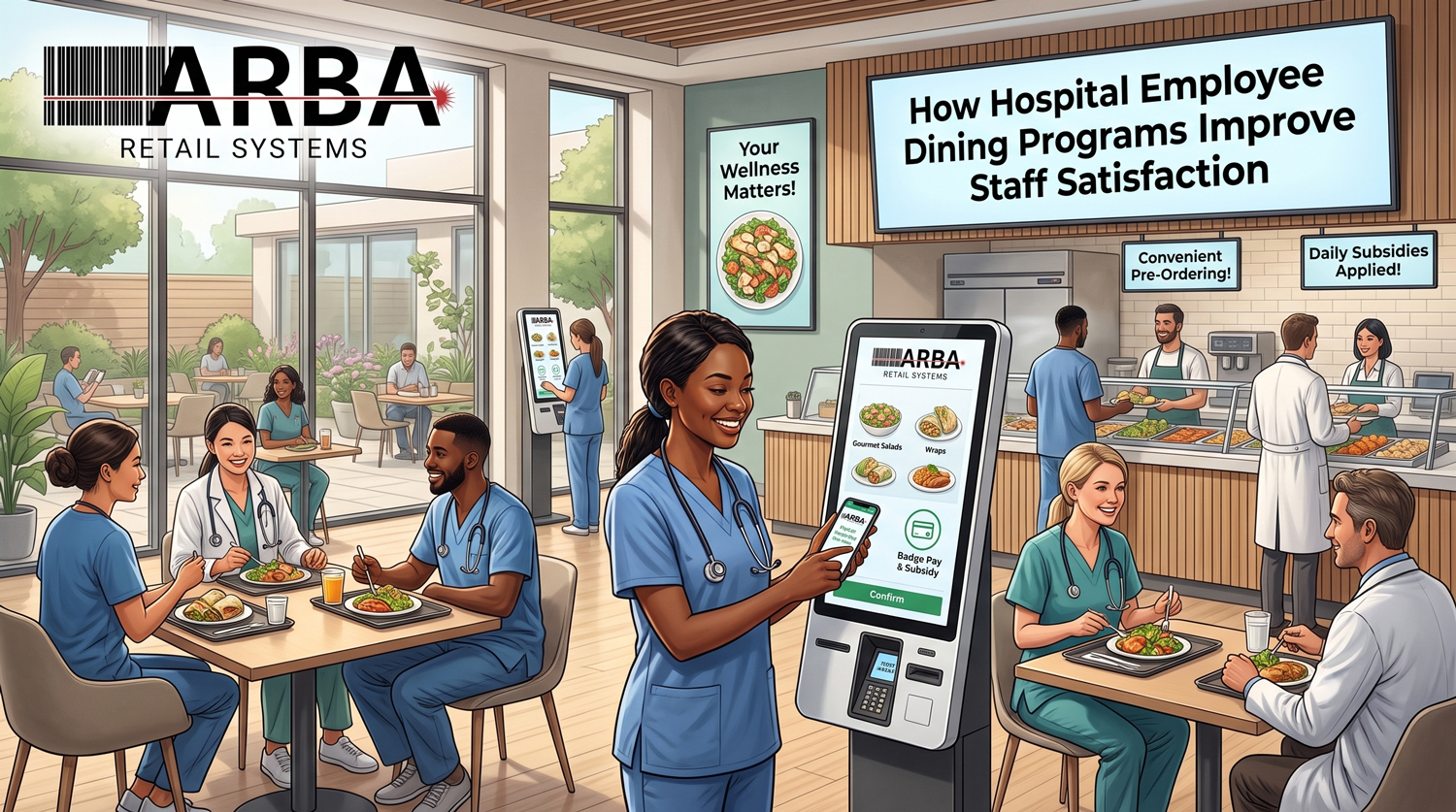
- Fast Badge Swipes: Utilizing Payroll Deductions POS functionality allows employees to pay using their existing staff badge in a single step, eliminating the need to carry wallets into food service areas.
- Dedicated Staff Express Lanes: Facilities utilizing specialized Clinical Cafeteria POS setups can establish express checkout lines or self-service terminals reserved exclusively for badged staff during peak meal times.
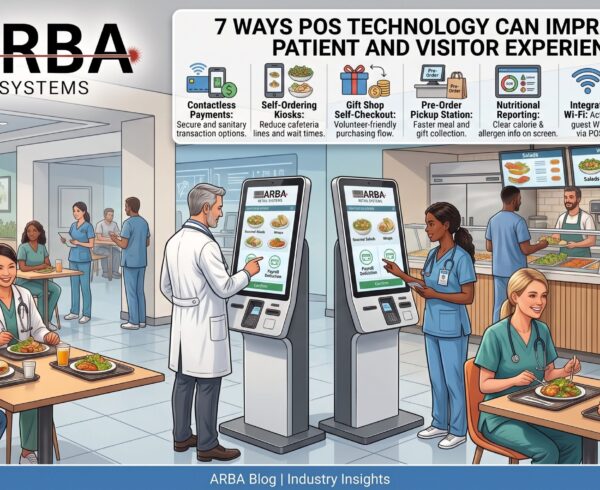
- Pre-Ordering Functionality: Implementing a modern Healthcare Food Ordering System enables employees to order meals from their nursing stations prior to taking their break, ensuring their food is prepared and waiting when they step off the floor.
Data from the U.S. Bureau of Labor Statistics (BLS) highlights that workplace environment and functional support services play a measurable role in long-term staff retention within healthcare and social assistance sectors.
2. Ensuring Equitable Food Access for Night Shift Workers
A recurring complaint among healthcare staff is the disparity in dining services between day and night shifts. While daytime workers enjoy full hot food stations, salad bars, and staffed coffee shops, night shift personnel are frequently left with limited options, such as basic vending machines stocked with processed snacks.
Modern point-of-sale technology resolves this disparity without imposing unsustainable labor costs on the hospital:
- Unattended Micro-Markets: Hospitals can convert sections of their dining rooms into secure, unattended grab-and-go markets for night shifts.
- Automated Payment Terminals: By integrating a Cashless Payment System, night shift workers can purchase fresh meals, salads, and premium beverages 24 hours a day using automated kiosks.
- Consistent Payroll Integration: Employees working overnight receive the exact same payroll deduction benefits, meal subsidies, and badge-pay access as daytime staff.
3. Implementing Flexible Meal Subsidies and Financial Perks
Food service programs offer hospital leadership a direct, flexible channel for delivering employee recognition and financial wellness perks. Instead of administrative gift card distribution—which requires manual tracking and creates auditing headaches—a centralized Healthcare Point Of Sale allows HR teams to manage employee dining incentives digitally.
Hospitals can easily structure tailored meal programs, such as:
- Daily or Monthly Subsidies: Automatically applying a set dollar amount (e.g., $5 per shift) toward employee meals upon scanning their staff badge.
- Departmental Rewards: Granting digital meal credits to specific units or teams as recognition for reaching safety milestones or working extra shifts.
- Declining Balance Accounts: Allowing employees or departments to deposit tax-advantaged pre-tax dollars into dedicated dining accounts.
Because these incentives are managed on an Enterprise POS Software framework, all subsidies are automatically calculated at the register without requiring cashiers to manually enter discount codes.
4. Enhancing Hygiene and Operational Safety
In medical environments, reducing unnecessary physical contact with external items is an ongoing priority. Carrying personal leather wallets, cash, or physical credit cards from non-sterile areas into dining spaces and back to clinical units introduces unnecessary cross-contamination risks.
Adopting a comprehensive Cashless POS Systems model creates a cleaner dining environment. Employees can complete transactions entirely using sanitized RFID badges or contactless mobile payments. Eliminating physical cash handling at cafeteria registers also speeds up lines, reduces cashier balancing errors, and eliminates the security risks associated with holding large amounts of cash on campus.
5. Bridging the Gap Between HR, Payroll, and Dining Operations
From an administrative perspective, an employee dining program is only as effective as its backend integration. Attempting to manage payroll deductions through manual spreadsheets or disconnected software leads to billing disputes, payroll errors, and administrative burden.
Deploying specialized Corporate Dining POS Solutions ensures that every transaction is encrypted, tracked, and automatically batch-processed to the hospital’s HR and payroll system (such as Kronos, Lawson, Workday, or ADP).
Furthermore, robust real-time tracking from a central POS Inventory System ensures dietary managers know precisely which menu items are most popular among staff, enabling them to continually refine menus to match employee preferences.
Elevating the Healthcare Workplace Experience
An efficient, accessible, and modern employee dining program sends a clear message to healthcare staff: their time, comfort, and well-being are valued by leadership. By leveraging dedicated healthcare point-of-sale technology to eliminate line delays, expand 24/7 dining access, and simplify payments, hospitals can turn their cafeteria into a major asset for staff satisfaction and retention.
Discover how specialized healthcare point-of-sale solutions can optimize your facility’s dining programs by visiting ARBA Retail Systems.